CONICET and INTA are fundamental parts of the Science and Technology System, which originated in the 1950s, and developed a common relationship and history for more than 60 years. This history was formalized and institutionalized with the signing of an agreement between CONICET and INTA for the creation of Dual Dependency Units (UEDD), with the aim of deepening reciprocal complementarity actions in the promotion and execution of scientific research and technology, transfer of the results to the socio-productive environment and training of human resources, which contribute to the advancement of knowledge in areas of mutual interest and to sustainable socio-economic development.
Within this Agreement, seven 7 UEDDs were created, with a federal territorial distribution, where more than 800 researchers (CONICET and INTA-CONICET) and 400 CONICET fellows perform their functions.
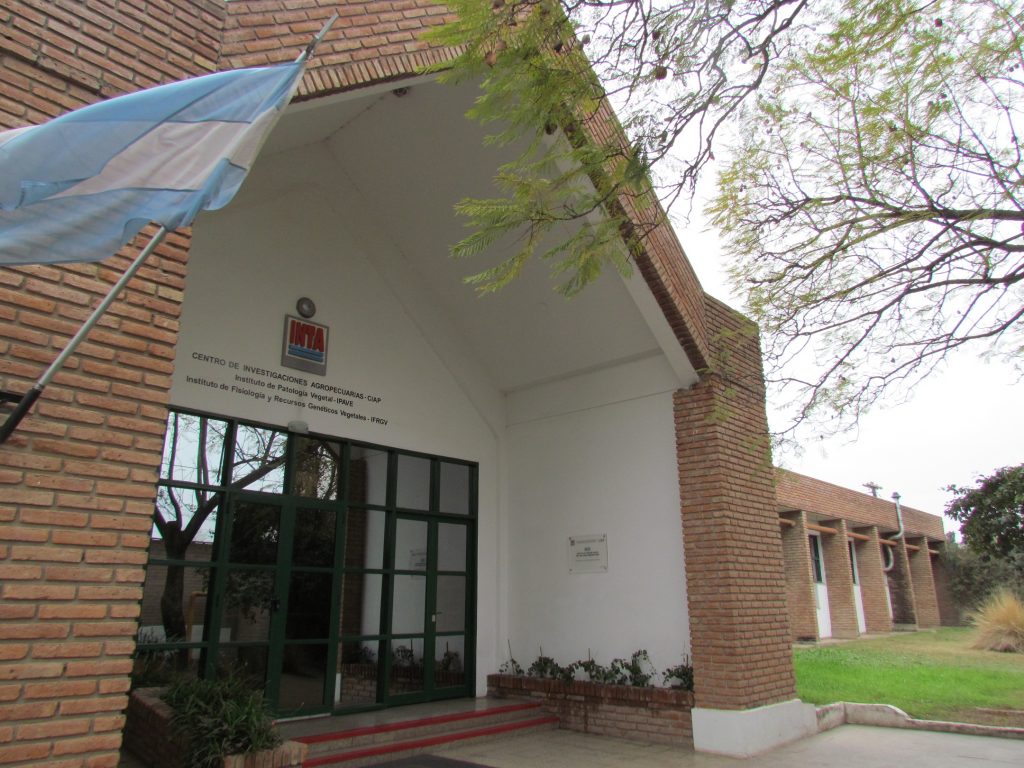
The Unidad de Estudios Agropecuarios (UDEA), one of the INTA-CONICET UEDD, was established at the Instituto de Fisiología y Recursos Genéticos Vegetal "Ing. Victorio S. Trippi" (IFRGV), belonging to the Centro de Investigaciones Agropecuarias (CIAP) of INTA, located on Camino 60 cuadras km 5 and ½, in the city of Córdoba, Argentina.
The IFRGV-UDEA is the product of the committed work and foundational actions of leading researchers in the areas of Plant Physiology and Genetic Improvement, such as Roberto Racca (INTA), Elvio Biderbost (INTA), Edith Taleisnik (CONICET) and Victorio Trippi (CONICET-National University of Córdoba), and their respective working groups.
The UDEA was established with the purpose of generating basic knowledge at ecophysiological, physiological, biochemical and molecular level, and developing technology for innovation in the prevention and/or mitigation of abiotic and biotic stresses on agricultural and agroforestry production, in a sustainable way, promoting the transfer to the socio-productive environment and the training of human resources.
The main lines of research are:
- Basic studies on processes at the ecophysiological, physiological, biochemical, molecular and biophysical levels of plants subjected to different conditions of abiotic stresses and interactions with beneficial microorganisms and pathogens.
- Characterization and improvement of native and introduced plant genetic resources.
- Study of the microbiota of soil and plants and its effects (beneficial or detrimental) on the responses to different stress conditions.