Autophagy and Immunity in Plants in the context of temperature increases Associated with Climate Change


 Joaquín Suárez
CONICET PhD Fellow
 Iñaki Oribe
Undergraduate Student
 Martina Apelans
Undergraduate Student
Our group studies how plants integrate hormonal, redox and stress signals to regulate growth, defense and immunity under high temperatures. We use molecular biology, genetics and plant physiology approaches, mainly in the model species Arabidopsis thaliana and in crops of agronomic interest such as Glycine max (soybean).
One of our main research lines focuses on the role of selective autophagy in plant immunity at elevated temperatures. In particular, we study the autophagy receptor NBR1 and its role in the selective degradation of components associated with hormonal signaling pathways involved in growth–defense balance during thermomorphogenesis and plant–pathogen interactions.
We also investigate how heat stress alters cellular redox homeostasis and chloroplast dynamics, including stromule formation and retrograde signaling associated with acclimation and thermotolerance. We are currently exploring sustainable strategies such as seed thermopriming and Bradyrhizobium inoculation to improve heat stress resilience in soybean.
Publications
- Torres, JR, Lescano López I, & Alvarez ME. 2025. A comet assay protocol for analysis of DNA damage in cryopreserved nuclei from Arabidopsis seeds, seedlings, and leaves. Plant Science, 112798. DOI: 10.1016/j.plantsci.2025.112798.
- Lescano López I, Torres, JR, Cecchini NM & Alvarez ME. 2024. Arabidopsis DNA glycosylase MBD4L improves recovery of aged seeds. The Plant Journal. DOI: 10.1111/tpj.16907.
- Torres JR, Lescano I, Alvarez ME. The Arabidopsis DNA glycosylase MBD4L repairs the nuclear genome in vivo. The Plant Journal, DOI:10.1111/tpj.16344.
- Miranda de la Torre J*, Peppino Margutti MJ*, Lescano I, Cambiagno DA, Alvarez ME, Cecchini NM. 2023. The Arabidopsis chromatin regulator MOM1 is a negative component of the defense priming induced by AZA, BABA and PIP. Frontiers in Plant Science 14, DOI: 10.3389/fpls.2023.1133327.
- Cecchini NM, Torres JR*, Lescano I*, Cobo S, Nota F, Álvarez ME. 2022. Alternative splicing of an exitron determines the subnuclear localization of the Arabidopsis DNA-glycosylase MBD4L under heat stress. The Plant Journal, 110(2), 377-388. DOI: 10.1111/tpj.15675.
- Lescano CI*, Devegili AM, Martini C, Tessi TM, González C & M Desimone. 2020. Ureide metabolism in Arabidopsis thaliana is modulated by C:N balance. Journal of Plant Research 133, 739–749. DOI: 10.1007/s10265-020-01215-x. *Corresponding author.
- Tessi TM, Brumm S, Winklbauer E, Schumacher B, Pettinari, GL, Lescano I, Gonzalez CA, Wanke D, Maurino V, Harter K, Desimone M. 2020. Arabidopsis AZG2 Transports Cytokinins in vivo and Regulates Lateral Root Emergence. New Phytologist, 229(2), 979-993. DOI: 10.1111/nph.16943.
- Lescano CI*. 2020. Determination of ureides content in plant tissues. Bioprotocol 10 (11), e3642, 2020. DOI:10.21769/BioProtoc.3642. *Corresponding author.
- Lescano I*, Bogino MF, Martini C, Tessi TM, González C, Schumacher K & M Desimone. 2020. Ureide Permeases 5 (AtUPS5) connects cell compartments involved in ureide metabolism. Plant Physiol. 2020 Mar;182(3):1310-1325. DOI:10.1104/pp.19.01136. *Senior author. (ver abajo, Figuras 1 y 2)
- Lescano I, Martini C, González C & M Desimone. 2016. Allantoin accumulation mediated by allantoinase down-regulation and transport by Ureide Permease 5 (UPS5) confers salt stress tolerance to Arabidopsis plants. Plant Mol Biol 91 (4-5), 581-595. DOI 10.1007/s11103-016-0490-7.
Teaching
Assistant Professor (Part-time). Departamento de Química Biológica Ranwel Caputto. Fac. de Ciencias Químicas. Universidad Nacional de Córdoba, Argentina. (2018-act.).
Gallerie
-
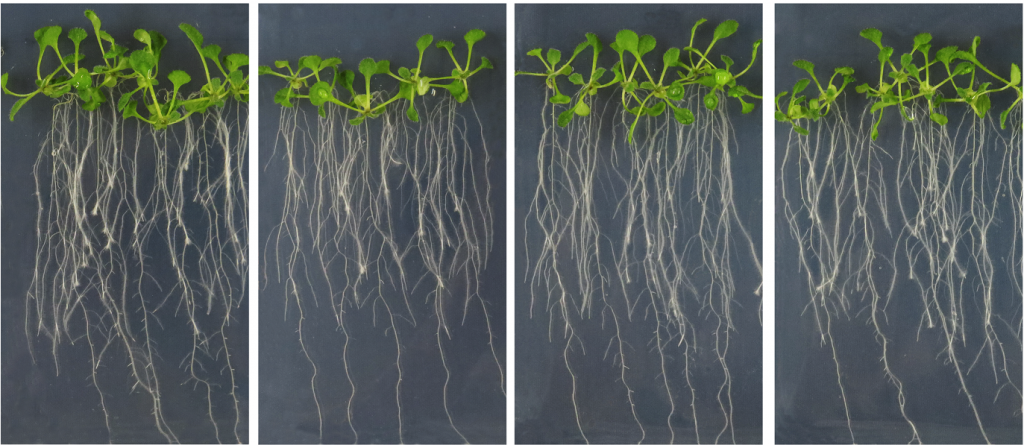
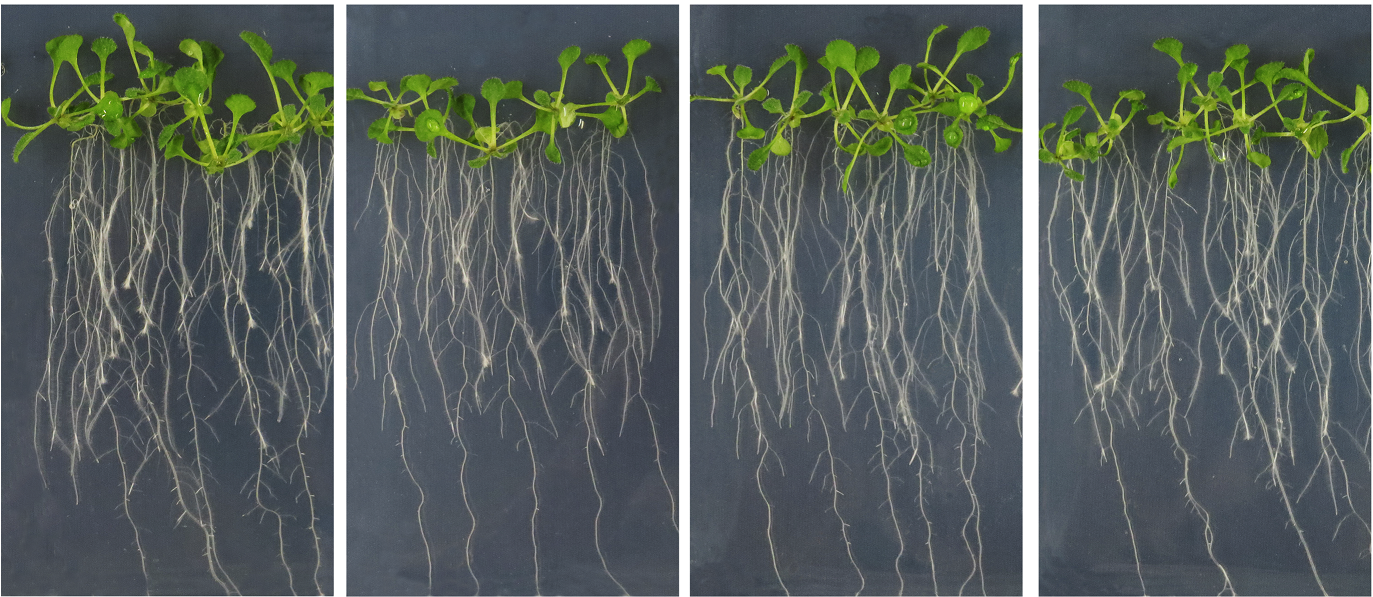
- Arabidopsis plants grown in vitro
-
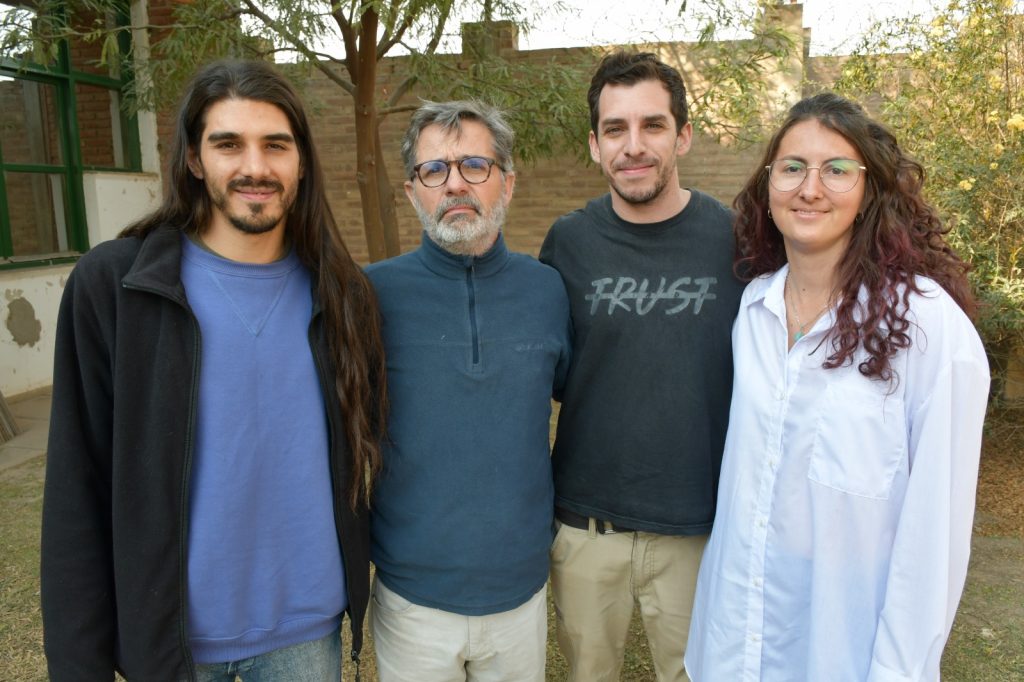
- Working group at UDEA
-
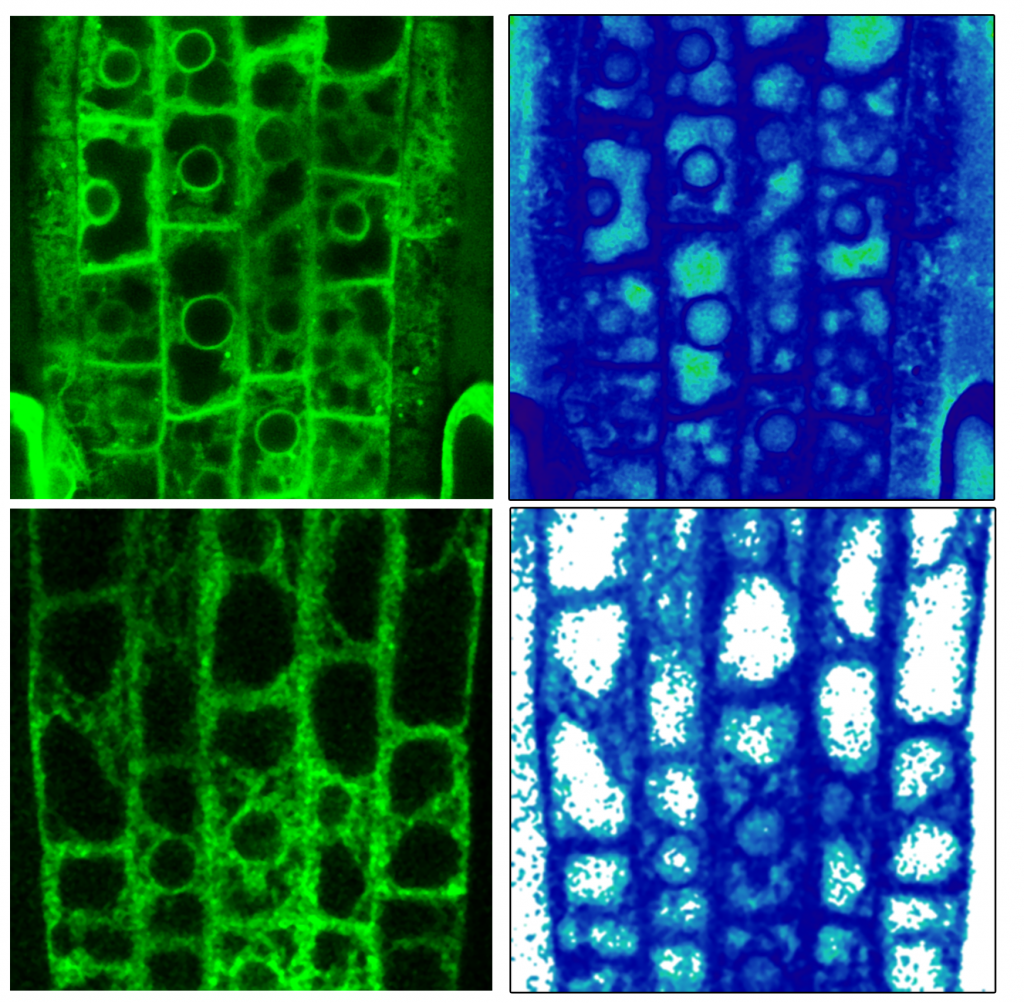
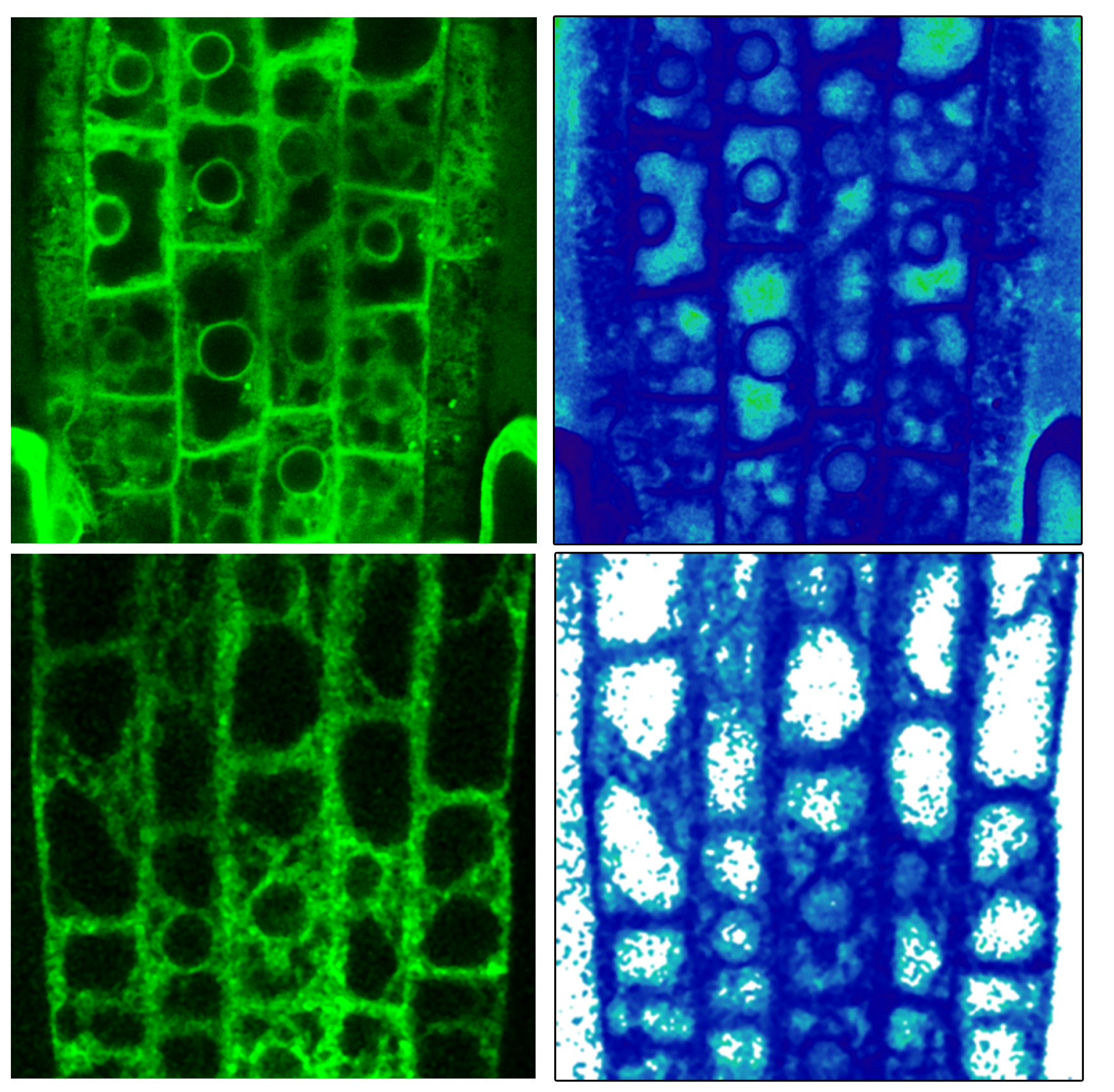
- Expression of the roGFP sensor in the secretory pathway. Left: excitation at 488 nm, right: 405/488 nm ratio
-
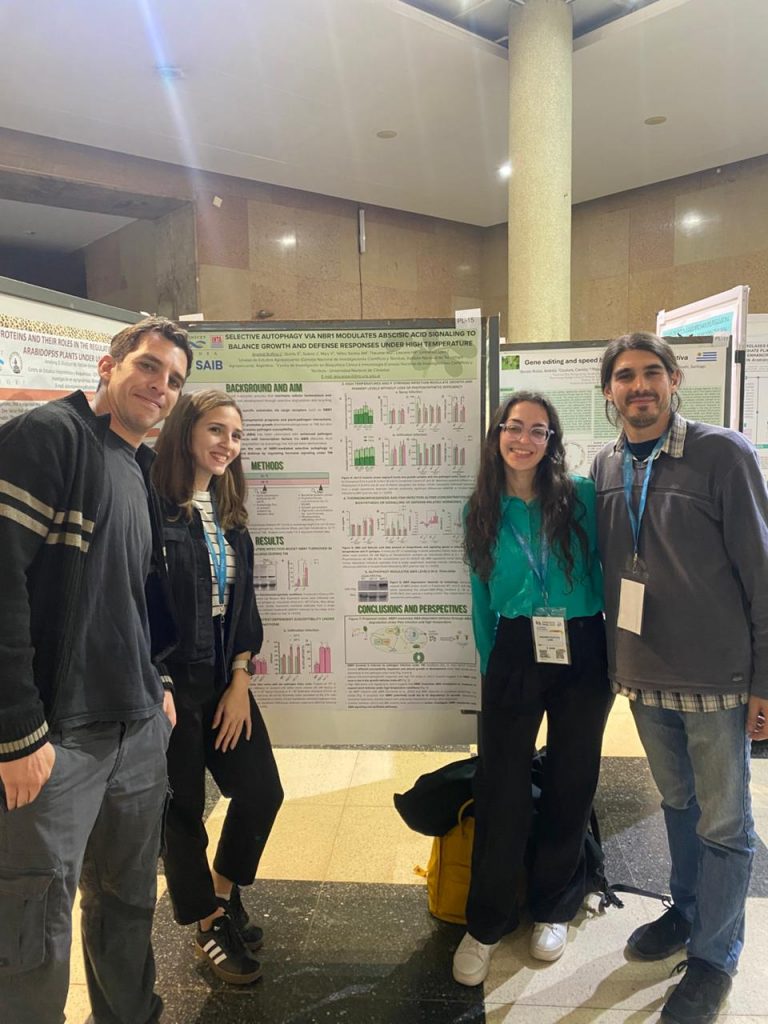
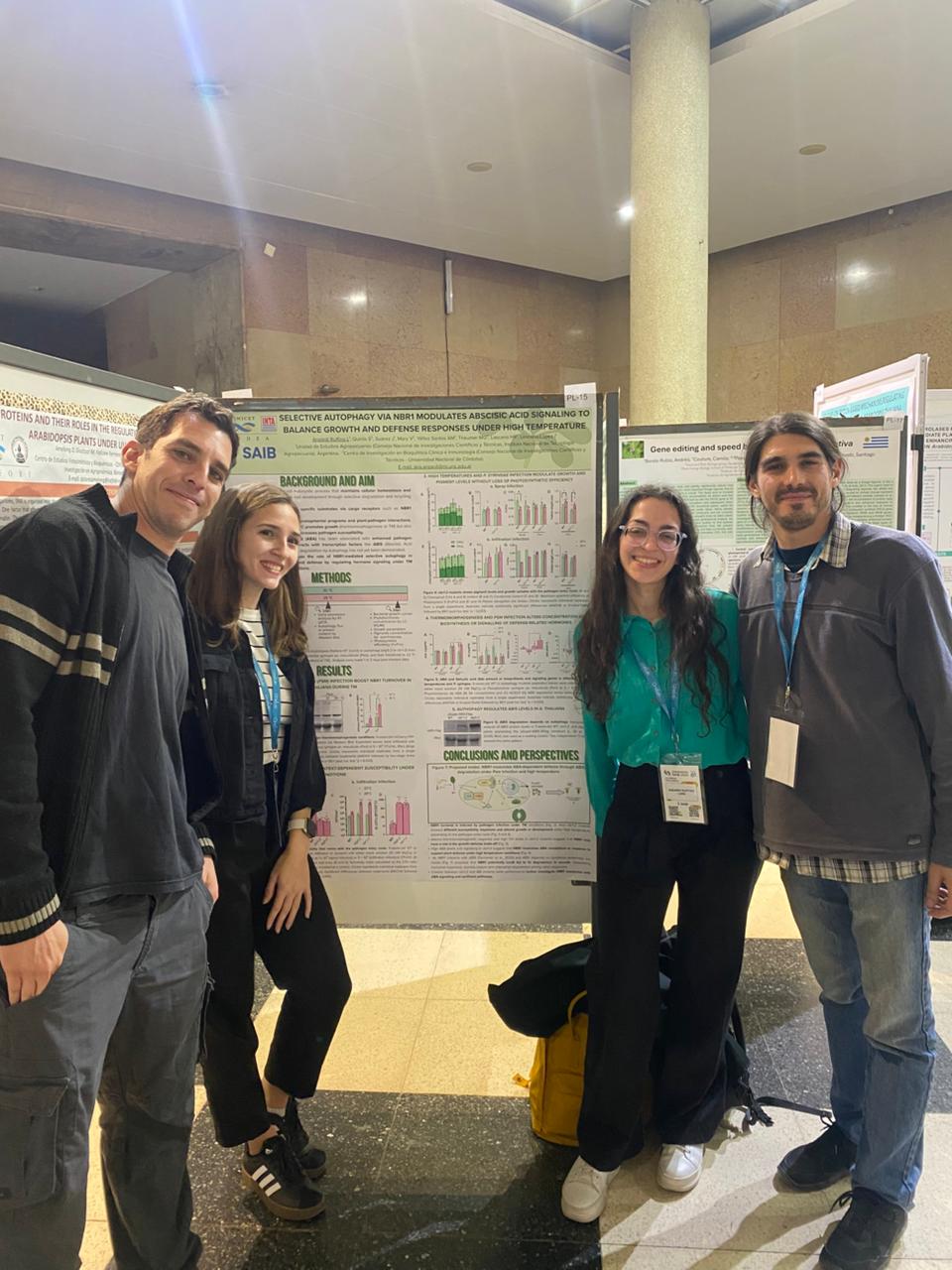
- SAIB Congress 2025
Video: Key discovery for seed germination under increased temperature*
*You can set video subtitles to be automatically generated in your preferred language.